
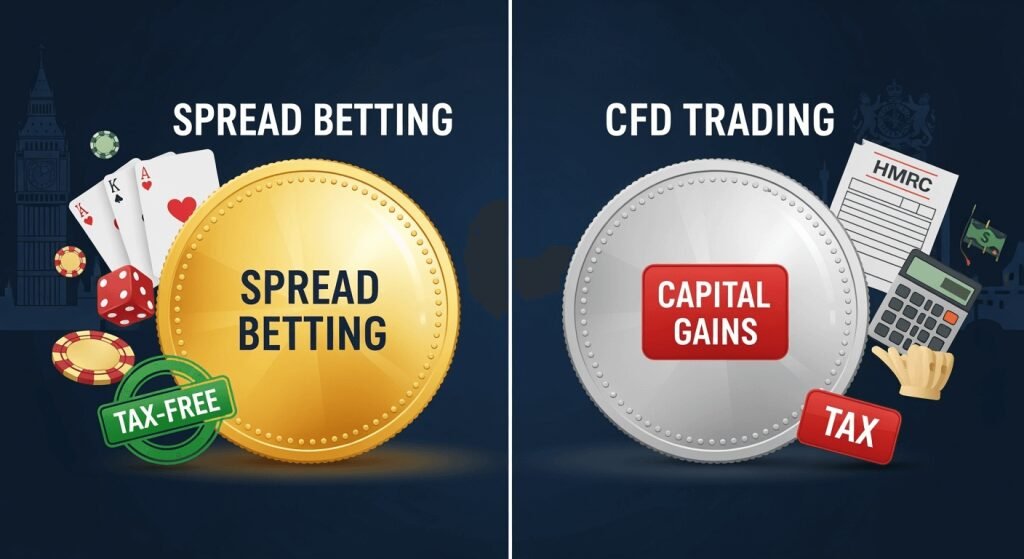
Spread betting or CFD (Contracts for Difference) are two of the most popular derivative instruments used by traders to speculate on financial markets. This review explores the mechanics, benefits, and risks of each to help you determine which fits your trading style.
🔹 Good Spread Betting Sites UK Free Bets. 🔹Spread Betting free bets UK turn into real cash if you win. 🔹Top 10 bookmakers
 6 FREE £5 SPREAD BETS + FIXED ODDS BET £10 GET £60Plus £300 Cashback | Spread Betting and Traditional Fixed OddsFull T&Cs apply. Spread betting losses can exceed deposit. 18+ www.gambleaware.org.
 6 FREE £5 SPREAD BETS + FIXED ODDS BET £10 GET £60Plus £300 Cashback | Spread Betting and Traditional Fixed OddsPlace a £10 fixed odds single or £10 each-way bet at minimum odds of 1/2 and, once your qualifying bet has been settled, get 3 x £10 free fixed odds bets, 3 x £5 Total Goals football spread bets and 3 x £5 Winning Favourites spread bets and a £1 racing Race Index spread bet. 18+ www.gambleaware.org.
What is Spread Betting?
Spread betting is a tax-efficient way to speculate on the price movements of thousands of global financial instruments, including stocks, indices, currencies, and commodities.
When you spread bet, you do not own the underlying asset. Instead, you place a bet on whether the price will go up or down.
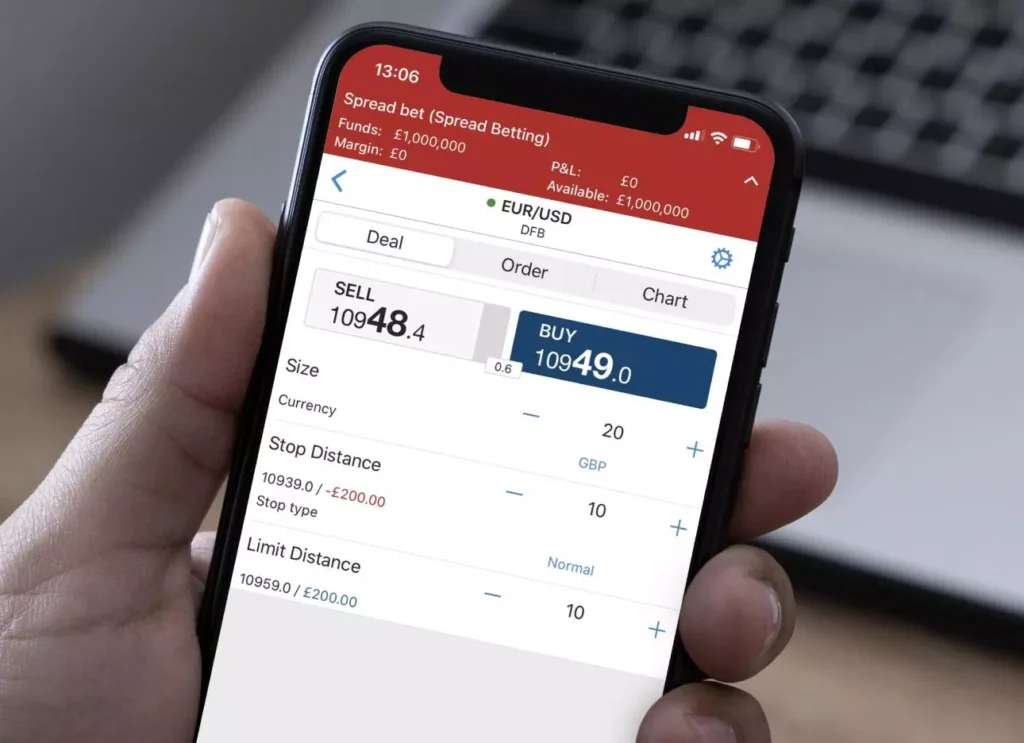
The “spread” is the difference between the buy and sell price. You choose a stake per point of movement (e.g., £5 per point). If the market moves in your favour, your profit is your stake multiplied by the number of points the market moved. If it moves against you, you lose that same amount.
Spread Betting or CFD Key Advantage: Tax Treatment.
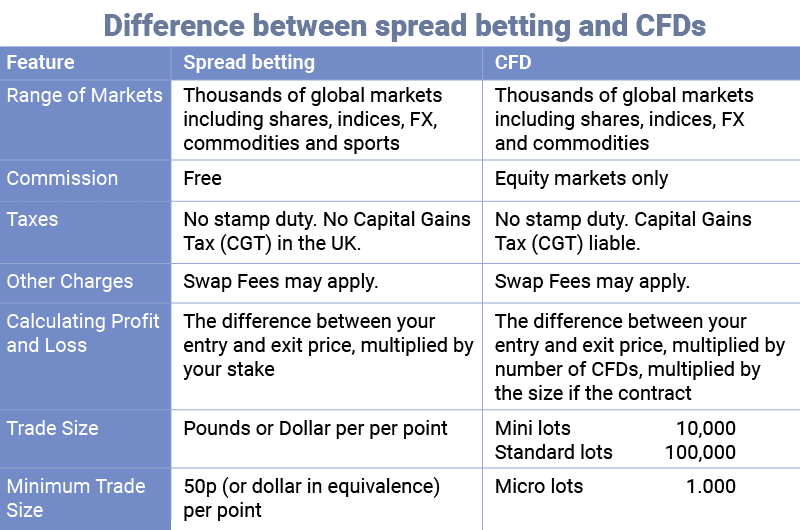
In the UK and Ireland, spread betting is currently classified as gambling, meaning profits are exempt from Capital Gains Tax (CGT) and Stamp Duty. This makes it an incredibly attractive option for retail traders looking to maximise their net returns.
What are CFDs?
A Contract for Difference (CFD) is an agreement to exchange the difference in the value of an asset from the time the contract is opened to when it is closed. Like spread betting, CFDs are derivative products that allow for “long” (buying) and “short” (selling) positions without owning the physical asset.
Spread Betting or CFD similarities
CFDs are more widely available globally than spread betting and are often preferred by professional traders because they mirror the underlying market more closely.
Key Advantage: Hedging and Offsetting
While CFD profits are subject to capital gains tax, this comes with a silver lining: losses can be offset against future profits for tax purposes.
This makes CFDs a superior tool for hedging an existing physical portfolio. For example, if you own physical Apple shares but expect a short-term dip, you can “short” an equivalent amount of Apple CFDs to offset potential losses.
Both instruments utilise leverage, which is perhaps the most critical concept for any trader to understand. Leverage allows you to gain exposure to a large position with only a small initial deposit, known as “margin”.
While leverage can magnify your profits, it is a double-edged sword. It equally magnifies your losses. In volatile markets, it is possible to lose your entire account balance rapidly if you do not employ strict risk management.
Spread betting or CFD Comparing the Costs
- The Spread: In spread betting, the cost of the trade is usually wrapped into the spread.
- Commissions: CFD trading on shares often involves a commission fee, though many brokers offer commission-free trading on FX and indices in exchange for a wider spread.
- Overnight Holding Costs: If you keep a position open past the end of the trading day, both instruments incur “swap” or holding costs, which are essentially interest charges for the leveraged funds.
Risk Management
Because of the high-risk nature of derivatives, both spread betting or CFD platforms offer tools to protect your capital:
- Stop-Loss Orders: Automatically closes your trade at a predetermined price level.
- Guaranteed Stops: For a small fee, these ensure your trade is closed at the exact price you set, eliminating the risk of “slippage” during market gaps.
- Negative Balance Protection: Most regulated brokers ensure that retail clients cannot lose more money than they have in their account.

Which One Should You Choose?
Choose spread betting if:
- You are a UK or Irish resident looking for tax-free profits.
- You prefer a simple “pounds per point” structure.
- You are a retail trader focused on indices, FX, or commodities.
Choose CFDs if:
- You live outside the UK/Ireland.
- You want to hedge an existing share portfolio and value the ability to offset losses for tax purposes.
- You require a more direct interaction with market prices, often preferred by high-frequency or professional traders.

Spread betting or CFD Final Verdict
Both spread betting or CFD are powerful financial tools that provide access to global markets with minimal capital. However, they are high-risk products. Success requires a disciplined strategy, a deep understanding of leverage, and a robust risk management plan.
For most UK-based retail traders, the tax-free status of spread betting gives it a slight edge, but CFDs remain the global standard for professional-grade market speculation.
6 FREE £5 SPREAD BETS + FIXED ODDS BET £10 GET £60Plus £300 Cashback | Spread Betting and Traditional Fixed OddsFull T&Cs apply. Spread betting losses can exceed deposit. 18+ www.gambleaware.org.